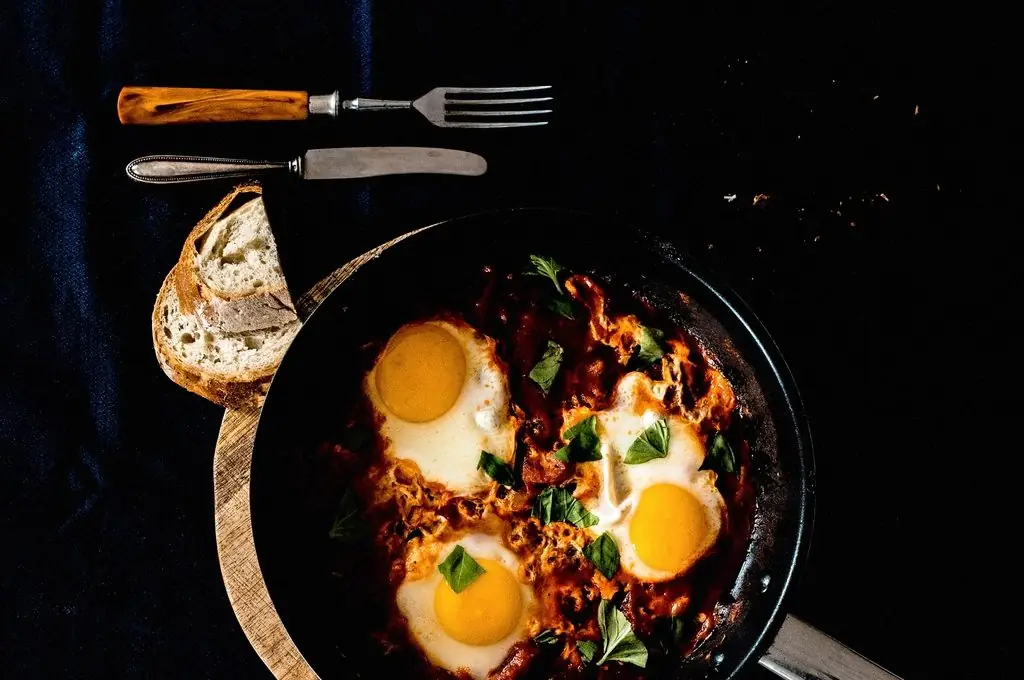
De Grassi carbon-steel skillet, 26 cm
$139 CAD
Wood
The two we actually reach for.
Sold out — small batch, restocking soon
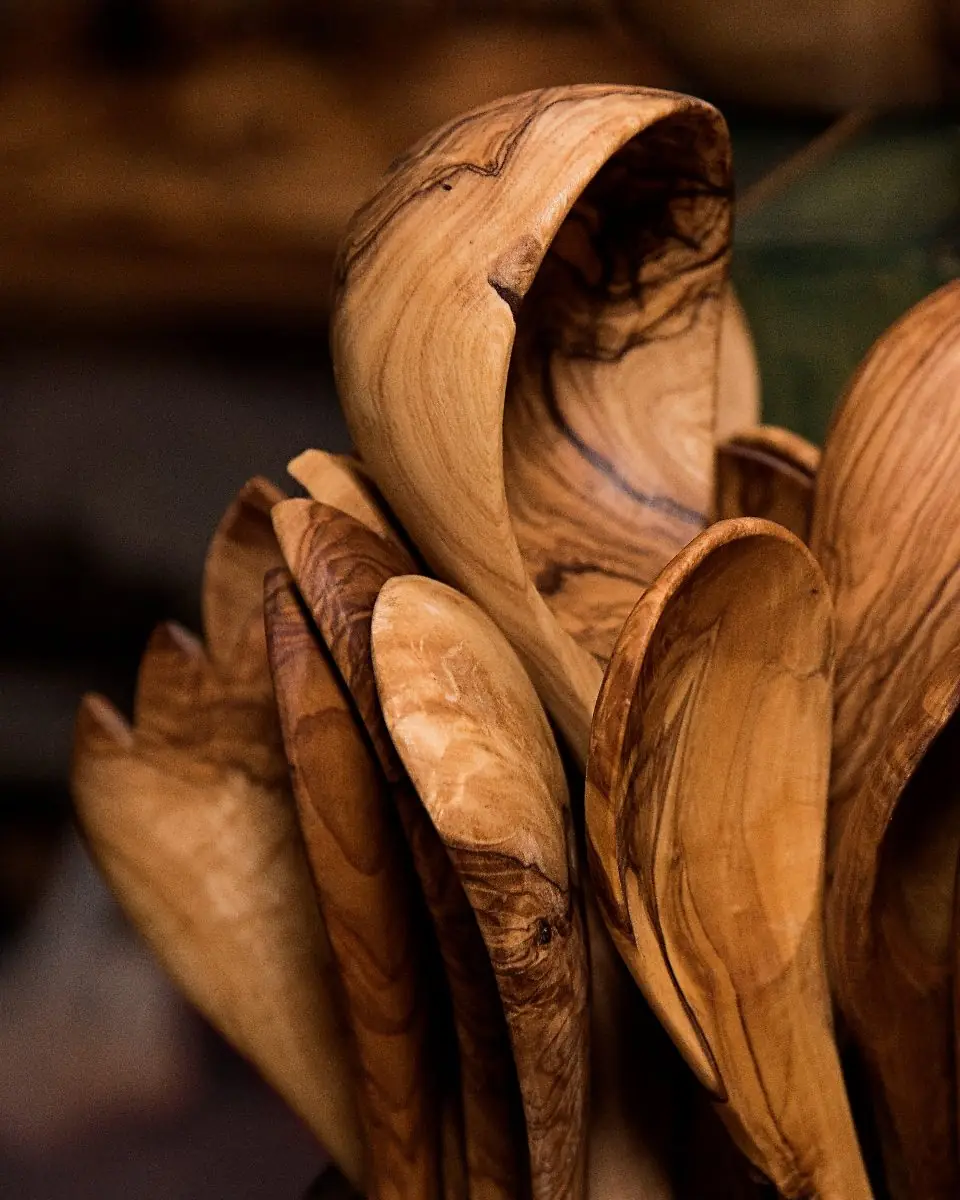
Two spoons that cover most of what you do at the stove: one with a flat edge for scraping the bottom of a pan and getting under a fried egg, one with a deeper round bowl for stirring soup and tasting. Olive wood is dense and close-grained, so it does not soak up oil, hold onto garlic, or fuzz up the way softer woods do.
Because it will not scratch, it is safe on your carbon-steel pan and enamel pot — no scraped seasoning, no chipped enamel. Each pair has its own grain pattern; no two are quite the same.
Hand wash with warm soapy water and dry right away — do not leave them soaking or standing bowl-down in a wet sink. Never the dishwasher; the heat cracks olive wood fast.
Natural olive wood has knots, colour swirls and the odd hairline mark in the grain — that is the material, not a defect. If you want a perfectly uniform, machine-matched pair, these will not be it.
The pair is deliberate. The flat-edged spoon gets into the corner where the side of a pan meets the base, lifts a fried egg, and pushes onions around without leaving a ring of stuck bits. The rounded spoon has a deeper bowl for stirring a pot of soup, folding a risotto, and stealing a taste. Between them they cover almost everything you do standing at the stove.
Olive wood is the reason they last. It is dense and close-grained, so it does not drink up oil, hold onto yesterday’s garlic, or roughen and split the way softer beech and pine spoons do. And because wood will not scratch, they are safe on the seasoned surface of the carbon-steel pan and the enamel of the pot — no scraped seasoning, no chipped coating.
Every piece of olive wood is different, so expect knots, swirls and warm colour changes in the grain — that is the material, not a flaw. Hand wash, dry them promptly, and give them a wipe of mineral oil when they look thirsty.
Currently sold out — small batches only. Join the restock note for the next one.